If you're waiting for mortgage rates to drop before you buy, you're not alone — and you're also making a bet that could cost you more than it saves you.
As of late June 2026, the average 30-year fixed mortgage rate sits around 6.5%, according to Freddie Mac's Primary Mortgage Market Survey. Rates have been essentially flat for the past six weeks, and most major forecasters don't see that changing dramatically anytime soon. So before you put your search on hold for a rate that may or may not arrive, it's worth understanding what waiting actually costs.
Where rates really stand
Rates aren't falling off a cliff, and they aren't expected to. Forecasts diverge depending on who you ask:
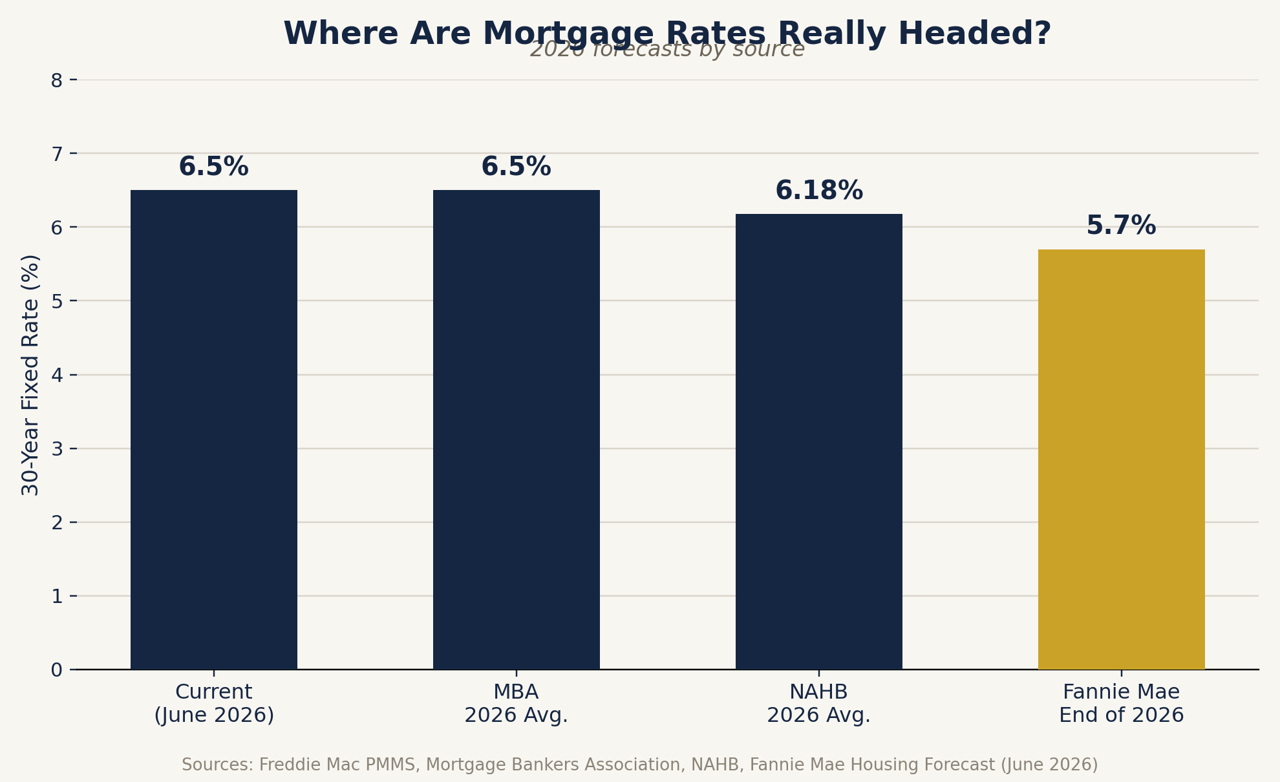
The Mortgage Bankers Association expects 30-year rates to average 6.5% across 2026. The National Association of Home Builders is a bit more optimistic, projecting an average of 6.18%. Fannie Mae's most recent housing forecast is the rosiest of the bunch, projecting rates easing to roughly 5.7% by the end of the year and holding in that 5.6%–5.7% range through 2027.
Even in the best-case scenario, no one is forecasting a return to 3% or 4% rates anytime soon. Most projections put 30-year rates in the 5.5%–6.4% range through 2030. In other words: today's rate isn't a temporary anomaly you're waiting out — it's closer to the new normal.
The price side nobody talks about
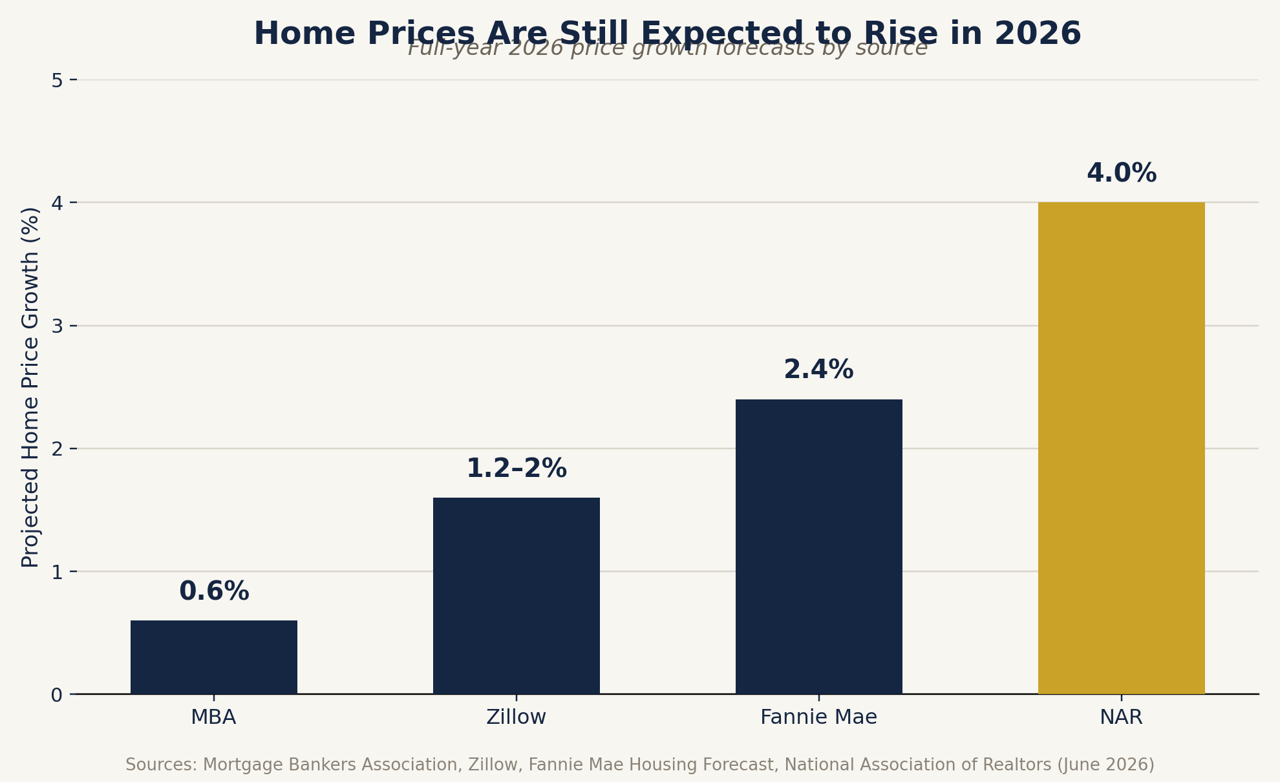
While buyers wait for rates to move, prices keep climbing — just more slowly than during the pandemic boom. Estimates for 2026 home price growth range from a conservative 0.6% (MBA) to as much as 4% (NAR), with Fannie Mae and Zillow landing in between at roughly 1.2%–2.4%. Most forecasters expect another 2%–4% of appreciation in 2027.
Here's why that matters: a rate is something you can renegotiate. A price is not. If you wait a year for rates to ease and the home you wanted appreciates even 3% in the meantime, a $1.2M property just cost you an extra $36,000 — money you'll never get back, regardless of what your interest rate ends up being.
The case for buying now and refinancing later
This is the logic behind "buy now, refinance later": you purchase at today's price, accept today's rate, and treat the rate as a placeholder rather than a permanent fixture.
Mortgages are refinanceable. Home prices, for all practical purposes, aren't. If rates do ease toward the 5.7%–6.2% range that Fannie Mae and others are projecting for 2026–2027, you simply refinance into the lower rate — and you do it on a home you already locked in at today's price, with today's equity position already working in your favor.
This isn't a reason to overextend yourself on a payment you can't comfortably afford today. The strategy only works if the home and the payment make sense at the current rate, with refinancing treated as a bonus if and when it happens — not a rescue plan you're counting on.
A few practical notes if you go this route:
Most lenders suggest a refinance is worth pursuing once you can lower your rate by at least three-quarters to a full percentage point, though the right threshold depends on your loan size, closing costs, and how long you plan to stay in the home. Ask your lender now about no-cost or low-cost refinance options down the line, and keep an eye on your loan's terms around prepayment penalties or refinance restrictions before you sign.
The bottom line
Rates may ease somewhat over the next year or two, but few credible forecasts see them returning to pre-2022 levels. Prices, meanwhile, are still expected to rise — just at a steadier pace. Waiting for the "perfect" rate often means paying more for the same home later, with no guarantee the rate environment will even cooperate.
If you've been sitting on the sidelines waiting for a sign, this is it: the math increasingly favors buying at today's price and managing the rate over time, not the other way around.
Thinking about timing your purchase right? Let's run the numbers on your specific situation — reach out and I'll walk you through what buying now versus waiting could actually mean for your budget and your equity.